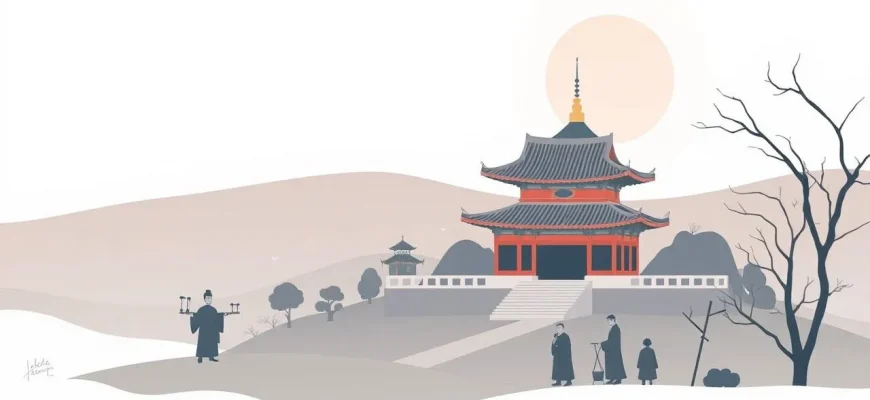
Delving into the serene world of Korean Buddhism through cinema offers a unique lens to view the country's rich cultural and spiritual heritage. This curated list of films not only showcases the historical significance of Buddhism in Korea but also provides a visual feast of traditional aesthetics, compelling narratives, and profound philosophical insights. Whether you're a history buff, a film enthusiast, or someone seeking spiritual enlightenment, these films are a treasure trove of cinematic storytelling.

Spring, Summer, Fall, Winter... and Spring (2003)
Description: This film follows the life of a Buddhist monk from childhood to old age, set in a floating monastery on a lake. It's a poetic exploration of life's cycles and the Buddhist principles of attachment, suffering, and enlightenment.
Fact: The film was shot in a real floating monastery, which was built specifically for the movie. It has been praised for its visual beauty and minimalistic storytelling.
 Watch Now
The Great Battle (2018)
Description: While primarily a war epic, the film includes Buddhist monks as part of the resistance against the Tang Dynasty, highlighting the role of Buddhism in Korean history.
Fact: The film features one of the largest battle scenes ever shot in Korean cinema, showcasing the scale of historical events.
Watch Now 
The Fortress (2017)
Description: This film, set during the Qing invasion of Korea, shows the moral dilemmas faced by the royal court, with Buddhist monks playing a significant role in the narrative.
Fact: The film was shot in the actual historical location, adding authenticity to its portrayal of the events.
Watch Now 
The Throne (2015)
Description: This film portrays the tragic relationship between King Yeongjo and his son, Crown Prince Sado, touching on themes of filial piety, which is deeply rooted in Buddhist teachings.
Fact: The film was based on real historical events, and the portrayal of the characters was critically acclaimed for its emotional depth.
Watch Now 
The Face Reader (2013)
Description: Set during the Joseon Dynasty, this film explores the art of physiognomy, which has roots in Buddhist philosophy, as a means to understand human nature and destiny.
Fact: It was one of the highest-grossing films in South Korea, blending historical drama with elements of mysticism.
30 Days Free The Last Princess (2016)
Description: While focusing on the life of Princess Deokhye, the film includes scenes where Buddhist rituals and practices are depicted, reflecting the cultural and spiritual backdrop of the time.
Fact: It was the first Korean film to be shot in Japan, where part of the princess's life took place.
30 Days Free 
Mandala (1981)
Description: "Mandala" explores the lives of two monks, one seeking enlightenment through traditional practices and the other through worldly experiences. It delves into the complexities of spiritual life and the search for meaning.
Fact: The film was controversial for its time due to its portrayal of Buddhist monks in a less than saintly light, sparking debates on the authenticity of spiritual paths.
30 Days Free 
Why Has Bodhi-Dharma Left for the East? (1989)
Description: This film examines the teachings of Zen Buddhism through the interactions of three characters at different stages of their spiritual journey, reflecting on the essence of Zen and its impact on life.
Fact: The director, Bae Yong-kyun, spent 7 years making this film, reflecting his own spiritual quest, which adds an authentic layer to the narrative.
30 Days Free 
The King and the Clown (2005)
Description: While not exclusively about Buddhism, this film includes elements of Buddhist philosophy and the historical context of King Yeonsan's reign, where Buddhist practices were prevalent.
Fact: It became one of the highest-grossing Korean films of all time, showcasing the intersection of history, politics, and spirituality.
30 Days Free 
The Sword with No Name (2009)
Description: This film explores the life of Empress Myeongseong, with Buddhist elements woven into the narrative, showcasing the influence of Buddhism on royal decisions and personal lives.
Fact: It was noted for its historical accuracy in depicting the life of the empress, including her spiritual practices.
30 Days Free