

Delving into the economic and social fabric of the Soviet Union, these films offer a unique perspective on the theme of bankruptcy. From the dramatic to the comedic, these movies provide a rich tapestry of stories that reflect the complexities of financial ruin in a socialist state. This collection not only entertains but also educates viewers on the economic challenges faced by individuals and institutions in the USSR.
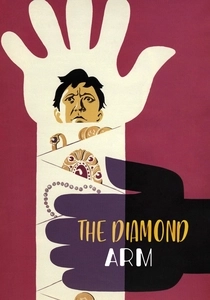
The Diamond Arm (1969)
Description: This comedy involves a man who unwittingly becomes involved in a smuggling operation, highlighting the absurdity of trying to gain wealth in a system where personal enrichment is frowned upon.
Fact: It was one of the highest-grossing Soviet films of all time and has become a cultural phenomenon.
 Watch Now

The Twelve Chairs (1971)
Description: A classic comedy about a man searching for his family's hidden jewels in the aftermath of the revolution, showcasing the desperation and ingenuity in times of financial hardship.
Fact: The film was remade several times, including a notable American version in
30 Days Free

The Station Master (1972)
Description: This adaptation of a Pushkin story subtly critiques the economic conditions of the time, focusing on the life of a station master and his daughter, who face financial difficulties.
Fact: The film was part of a series of adaptations of Pushkin's works, showcasing the literary heritage of Russia.
30 Days Free

The Unfinished Piece for the Player Piano (1977)
Description: While primarily a drama about love and art, it also reflects the economic and social constraints of the time, where personal aspirations often clashed with economic realities.
Fact: The film was based on a play by Anton Chekhov, known for his insightful social commentary.
30 Days Free

The Pokrovsky Gates (1982)
Description: This film captures the life of a communal apartment, reflecting the economic conditions and the struggle for personal space and resources in a bankrupt system.
Fact: It was one of the first Soviet films to openly discuss the issues of communal living.
30 Days Free

The Garage (1979)
Description: This satirical comedy explores the lengths to which people will go to secure a parking space, symbolizing the broader theme of scarcity and the struggle for resources in a bankrupt system.
Fact: The film was one of the most popular Soviet comedies, and its director, Eldar Ryazanov, was known for his sharp social critiques.
30 Days Free
The Irony of Fate (1975)
Description: While not directly about bankruptcy, this film humorously portrays the uniformity of Soviet housing, which can be seen as a metaphor for the economic stagnation and lack of personal wealth.
Fact: It became a New Year's tradition in Russia, and its popularity led to a sequel in
30 Days Free
The Adventures of a Dentist (1965)
Description: A satirical look at the Soviet healthcare system, where a dentist's financial struggles lead to comedic situations, reflecting broader economic issues.
Fact: The film was directed by Elem Klimov, who later became known for his anti-war film "Come and See."
30 Days Free
The House That Swift Built (1982)
Description: This film, inspired by Swift's "A Modest Proposal," satirizes the economic policies and the absurdities of trying to solve societal issues through extreme measures.
Fact: It was one of the few Soviet films to directly reference Western literature in a critical context.
30 Days Free
The Inspector General (1952)
Description: Based on Gogol's play, this comedy showcases the corruption and inefficiency of local government, which can be seen as a reflection of economic mismanagement leading to bankruptcy.
Fact: The film was one of the first Soviet adaptations of Gogol's work, highlighting the timeless nature of his critique.
30 Days Free